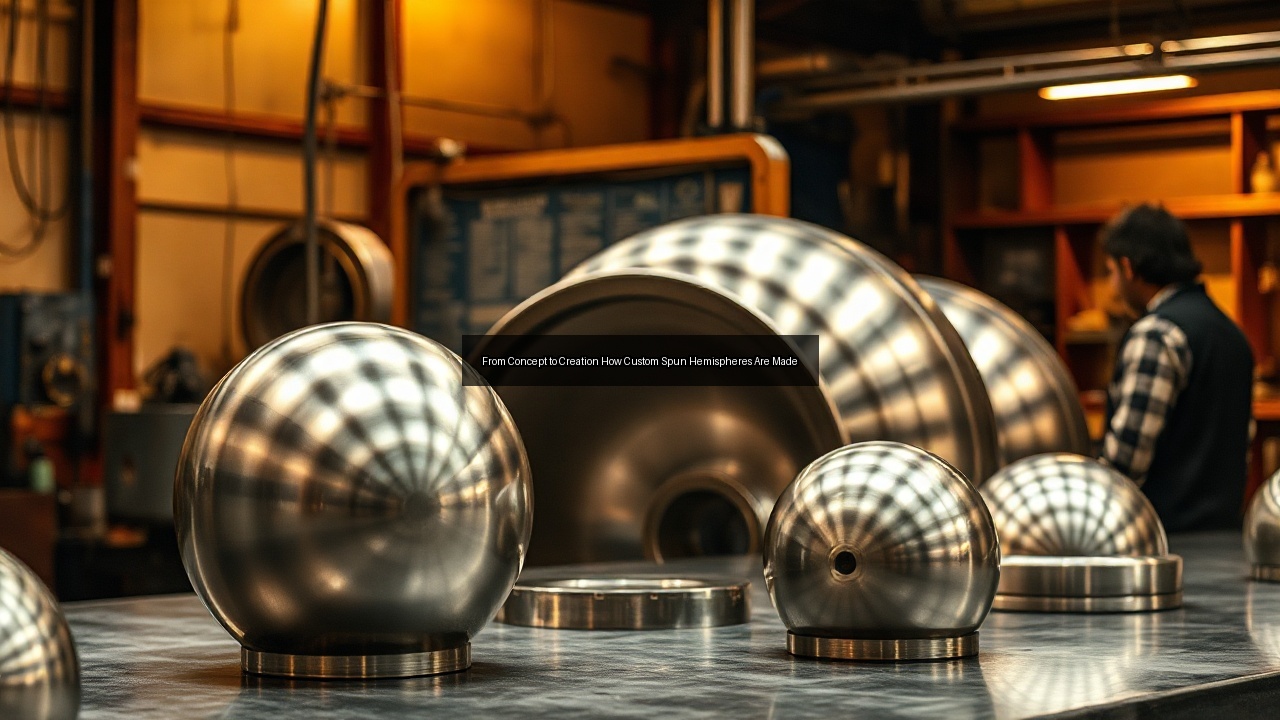
From Concept to Creation How Custom Spun Hemispheres Are Made
Understanding Custom Spun Hemispheres
What are Custom Spun Hemispheres?
Custom spun hemispheres are precision-engineered components created through a specialized technique known as metal spinning. This process involves shaping a flat disc of metal into a hollow, spherical form. The result is a seamless, lightweight, and often aesthetically pleasing hemisphere that serves various industrial and artistic purposes. Customization plays a crucial role in this production, allowing manufacturers to tailor the dimensions, materials, and finishes to meet specific project requirements. Whether for machinery, decorative elements, or specialized applications, custom spun hemispheres offer versatility that standard parts cannot match. Their unique properties make them ideal for use in a range of sectors, from aerospace to architectural design.
The manufacturing process of custom spun hemispheres is not only about shaping metal; it embodies a blend of artistry and engineering. Each hemisphere can be designed to meet specific performance criteria, such as weight, strength, and resistance to environmental factors, which is particularly important in industries like aerospace, where safety and reliability are paramount. Furthermore, the seamless nature of spun hemispheres reduces the potential for stress points and weaknesses that can occur in welded or joined components, enhancing their overall durability.
The Importance of Customization in Hemispheres
The ability to customize spun hemispheres significantly enhances their functionality and application. Customization allows engineers and designers to specify exact dimensions, wall thickness, and material types to suit their project needs. In industries where precise tolerances are vital, such as aerospace and automotive, having tailored components ensures optimal performance. Furthermore, customization opens avenues for creative design, enabling unique shapes and finishes that can elevate the aesthetic appeal of a product. This versatility means that custom spun hemispheres can be produced in various sizes and designs, addressing the specific demands of each project while maintaining high-quality standards.
Moreover, the customization process often involves collaboration between clients and manufacturers, allowing for innovation that can lead to the development of new products or enhanced functionality. For instance, custom spun hemispheres can be designed with integrated features, such as mounting brackets or custom fittings, further increasing their utility and adaptability across different applications.
Applications of Custom Spun Hemispheres
Custom spun hemispheres find applications across multiple fields, underscoring their importance in modern manufacturing. In the aerospace industry, they serve as components for fuel tanks, fairings, and other structural elements, where weight and strength are critical. In the automotive sector, spun hemispheres contribute to both functional parts and decorative elements within vehicles. Architectural firms utilize these hemispheres in lighting fixtures and decorative domes, marrying form and function. Beyond industrial applications, custom spun hemispheres also extend to artistic endeavors, where they can be transformed into sculptures or unique installations. This wide-ranging utility showcases the adaptability of custom spun hemispheres in meeting diverse needs.
In addition to these sectors, custom spun hemispheres are increasingly used in renewable energy technologies such as solar concentrators, where their reflective properties can enhance energy capture. They also find uses in the manufacturing of precision instruments and equipment where a high degree of accuracy is required. The versatility of custom spun hemispheres not only meets functional requirements but also supports innovative designs across various industries.
The Metal Spinning Process
Overview of Metal Spinning Techniques
The metal spinning process begins with a flat disc of material, typically aluminum, iron, or other metals, which is mounted on a lathe. The machinist then spins the disc at high speeds while applying pressure with a tool to shape it into the desired hemisphere. This technique allows for the creation of complex geometries without the need for welding or additional joints, resulting in a seamless product. After the initial shaping, further processes may be applied, such as trimming and finishing, to achieve the precise specifications required by the client. This method not only ensures high-quality outcomes but also allows for rapid production, making it an efficient choice for custom components.
The versatility of the metal spinning process allows for a variety of geometries, including conical shapes and flared edges, expanding the potential applications of spun hemispheres. The process also reduces material waste, as the spinning technique utilizes the metal more efficiently than traditional methods, making it an environmentally friendly option for manufacturing.
Materials Used: Aluminum, Iron, and Other Metals
Aluminum stands out as a preferred material for custom spun hemispheres due to its lightweight properties and resistance to corrosion. Its malleability makes it easy to spin and shape, allowing for intricate designs without compromising strength. Iron is another common choice, especially for applications requiring durability and robustness. It can withstand harsh conditions, making it ideal for heavy-duty applications. Other metals, such as brass and stainless steel, may also be employed depending on the specific requirements of the project. Each material offers unique benefits, and the choice often impacts the final product's performance, weight, and aesthetic qualities.
In recent years, the introduction of advanced alloys and composite materials has further diversified the options available for spun hemispheres. These materials may offer enhanced properties such as increased tensile strength, improved thermal resistance, or better aesthetic finishes, which can open new avenues for product development and application.
Role of the Machinist in Creating Spun Hemispheres
The machinist plays an integral role in the metal spinning process, acting as both artist and technician. Skilled machinists possess a deep understanding of materials and metalworking techniques, enabling them to manipulate the metal effectively during the spinning process. Their expertise ensures that the final product adheres to the specified tolerances and quality standards. They also make real-time adjustments to the spinning parameters, such as speed and pressure, to achieve the desired shape and finish. This hands-on involvement not only enhances the precision of each custom spun hemisphere but also fosters innovation, allowing for the exploration of new designs and applications.
Furthermore, machinists often participate in the design phase, offering valuable insights on manufacturability and material selection, which can lead to more efficient production processes and better-end products. Their craftsmanship can greatly influence the overall quality, performance, and aesthetic appeal of the spun hemispheres.
Quality Control and Finishing Touches
Ensuring Precision in Spun Hemisphere Production
Quality control is paramount in the production of custom spun hemispheres. Manufacturers implement rigorous inspection protocols at various stages of the production process to ensure that each component meets the required specifications. This may involve measuring wall thickness, checking for surface imperfections, and testing the dimensions against design specifications. Advanced technologies, such as laser measurement systems, can assist in achieving high levels of accuracy. By maintaining strict quality standards, manufacturers can guarantee that the spun hemispheres will perform reliably in their intended applications, thereby reducing the risk of failure and enhancing customer satisfaction.
Additionally, the implementation of quality management systems, such as ISO 9001, can further strengthen quality assurance practices. These systems ensure that every aspect of production, from raw material sourcing to final inspection, adheres to established standards, providing clients with confidence in the reliability and performance of their custom spun hemispheres.
Finishing Techniques for Custom Spun Hemispheres
Finishing techniques play a vital role in the final appearance and performance of custom spun hemispheres. After the initial spinning and quality checks, various finishing processes may be applied, including polishing, anodizing, and powder coating. Polishing enhances the aesthetic appeal, giving the hemisphere a smooth, reflective surface. Anodizing provides an additional layer of protection against corrosion while allowing for a range of color options. Powder coating can add a durable finish that resists scratches and wear, which is particularly beneficial in industrial applications. These finishing touches not only improve the look of the hemispheres but also extend their lifespan and functionality.
Moreover, specialized finishes, such as texturing or engraving, can be applied to create unique surface patterns or branding elements that enhance the product's visual appeal and marketability. These finishes can cater to specific customer preferences, making the spun hemispheres not only functional components but also works of art.
Testing for Durability and Performance
Before custom spun hemispheres are delivered, thorough testing ensures they meet durability and performance standards. This may include stress testing, fatigue testing, and environmental simulations to assess how the hemispheres will perform under real-world conditions. Such rigorous evaluations help identify any potential weaknesses and ensure that the product can withstand the rigors of its application, whether in high-stress industrial environments or decorative settings. Manufacturers often provide certification of compliance with industry standards, offering clients peace of mind that their custom spun hemispheres will deliver reliable performance over time. This dedication to quality and thorough testing solidifies the reputation of custom spun hemispheres as essential components in numerous applications.
Ultimately, the commitment to thorough testing and quality assurance not only reinforces the reliability of custom spun hemispheres but also positions manufacturers as leaders in the competitive landscape of precision engineering. As industries continue to evolve, the demand for high-quality, custom components like spun hemispheres will only grow, further emphasizing the need for innovation and excellence in their production.
See Also
- Unleashing Creativity with Custom Spun Hemispheres in Art
- Custom Spun Hemispheres in Architecture A Blend of Function and Aesthetics
- Behind the Scenes of Custom Spun Hemispheres in Manufacturing
- Elevate Your Metalworking Skills with Custom Spun Hemispheres
- Exploring the Versatility of Custom Spun Hemispheres in Modern Design